

The Rescue Guide
Why Your Landscape Lights Keep Failing (And How to Fix It)
If you're dealing with flickering bulbs or a design that just feels "off," you aren't alone. In Tampa Bay, the environment and poor design choices are a lighting system's worst enemy.
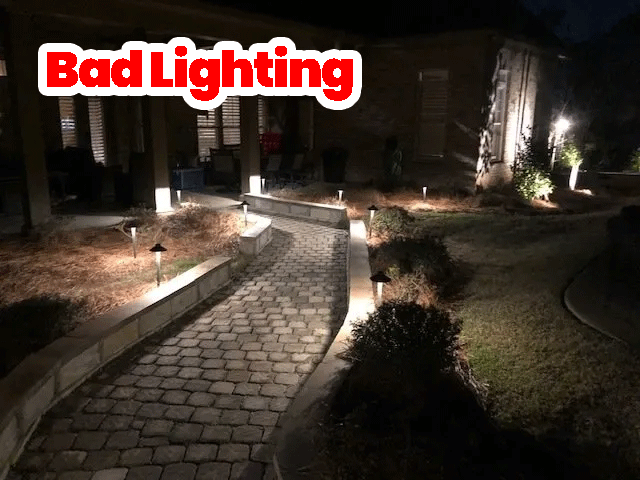
The Design Deficit: Why It Looks "Off"
Most failed systems aren't just an electrical mess—they are a visual mess. The two most common mistakes we see in St. Pete and Tampa are the use of the wrong color temperature and "Runway Lighting."
Using 5000K "Daylight" blue bulbs makes your luxury estate look like a gas station parking lot. High-end design requires warm, inviting 2700K - 3000K temperatures that complement the natural stone and foliage of Florida.
Furthermore, amateurs often over-use path lights, turning your sidewalk into a "focal point" that looks like an airport runway. Professional lighting should splash light down from focal points—like the canopy of a Grand Oak or architectural peaks—to illuminate the ground naturally, keeping the eye focused on the beauty of the home rather than the concrete path.
1. The Corrosion Tax (Aluminum vs. Salt Air)
Tampa Bay has some of the most corrosive air in the country. If your fixtures are made of powder-coated aluminum, the salt air will find a microscopic crack, get under the paint, and "eat" the metal from the inside out.
The Fix: We exclusively use Marine-Grade Solid Brass fixtures that patina and protect.

2. The "Wicking" Nightmare: Buried Splices
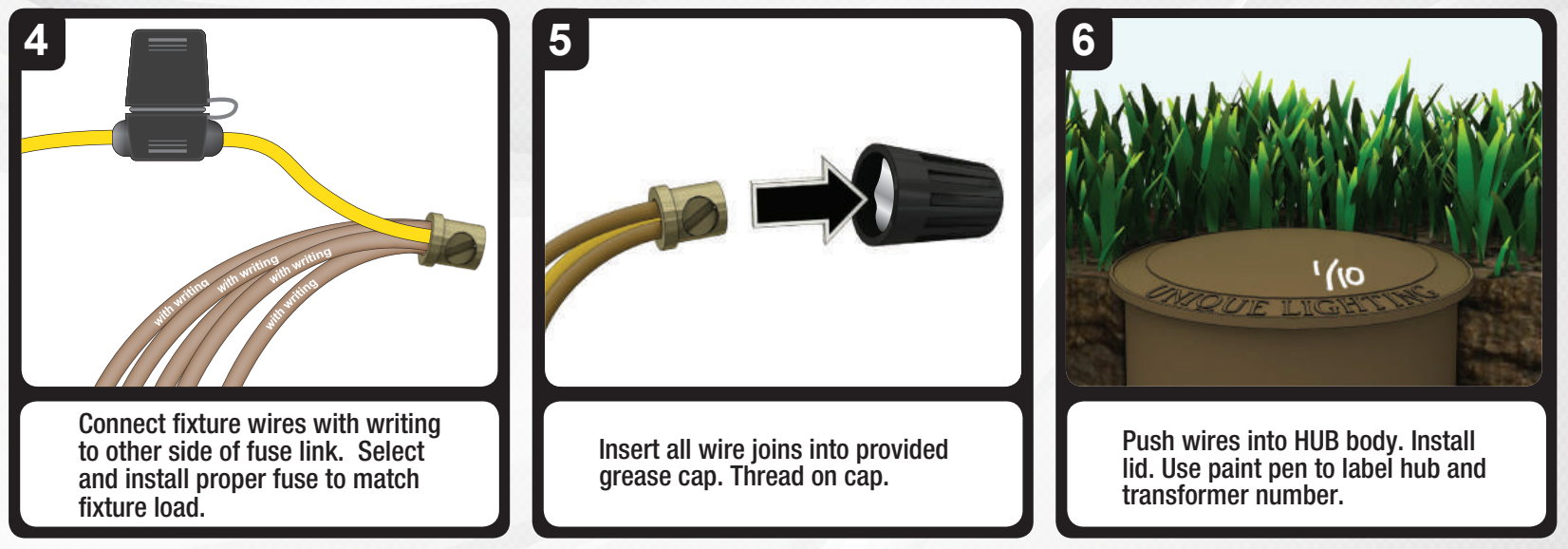
Most failures happen underground. Standard "daisy chain" wiring requires a wire splice at every fixture. If those splices aren't 100% waterproof, moisture will travel up the wire (wicking) and fry the LED driver.
The Fix: Our HUB System moves connections into a central, protected junction box, reducing buried splices by up to 80%.
3. Voltage Drop: Why Your Last Light is Dim
If the lights at the end of your driveway look yellow or dim compared to the ones near the house, you have Voltage Drop. This happens when the wire is too thin or the run is too long for a series connection.
The Fix: We use high-gauge copper wire and engineered "Home-Runs" to ensure every fixture receives 100% equal power for uniform brightness.
