

You already know the scene. A Tampa Bay thunderstorm rolls through in twenty minutes. The sky clears. Neighbors walk their dogs. And your yard is still a shallow pond.
Shoes squish. The patio edge is stained. Mosquitoes clock in for the night shift. The lawn you paid to keep green now looks like a problem you are supposed to hide.
Busy St. Petersburg homeowners are not asking for a farm. They want a luxurious outdoor space they can show off with pride. Florida weather keeps rewriting the script. That is the external problem. The internal one is quieter: frustration, embarrassment, and a little envy when the house next door looks finished and yours looks soggy.
Here is the point we tell every Pinellas and Hillsborough client: you deserve an outdoor haven that endures and delights, not one that forces a redo after every wet season and robs your weekends.
St. Petersburg yard drainage starts with the dirt, not another bag of sod. Standing water after a storm is a grading problem — and it is one of the most common reasons beautiful Tampa Bay landscapes fail within two seasons.

The problem

Same storm, still wet
If water is still sitting after the sky clears, the yard was never given a path. More fertilizer will not invent a slope.
Why St. Pete yards hold water when “sand should drain”
Sandy soil is supposed to drink rain. In St. Petersburg, it often cannot. Three local conditions stack against you at the same time.
1. The peninsula is flat
Much of St. Petersburg sits only a few feet above sea level, with less than 1% natural slope on a typical lot. Gravity is not going to carry water off your property for you. If the yard was built level “so it looks neat,” rain has nowhere to go except the lowest point — usually against the slab, the lanai, or the neighbor’s fence.
2. The water table sits close to the surface
In the wet season, groundwater in Pinellas County often climbs within about a foot of grade. When the ground below is already full, a two-inch afternoon downpour has nowhere to soak. It sits on the lawn, creeps toward the foundation, and turns the side yard into a ditch.
3. A hardpan layer can perch the water
Myakka fine sand — Florida’s state soil — is common across the peninsula. Below the pretty top sand there is often a darker, tighter layer that acts like a shallow bowl. Water perches above it even when the surface looks “well-draining.” That is why a yard can feel sandy underfoot and still pond for days.
Add compacted fill from old construction, a pool cage that blocks sheet flow, a patio poured with no pitch, and a summer that can drop 50-plus inches of rain with bursts of 1 to 3 inches in an hour. The landscape did not fail because you skipped a Saturday. It failed because water was never given a designed path.
Tired of mopping the backyard after every cell?
Schedule a free, no-pressure design consult. We will walk the low spots and show you how the water should leave.
Warning signs your yard needs grading, not another bag of sod
If any of these sound familiar after a typical Pinellas storm, the issue is below the grass, not on top of it.
- Puddles last more than 24 hours after a normal rain, or more than 72 hours after a heavy cell.
- Water tracks toward the house slab, pool cage footer, or AC pad instead of away from it.
- Pavers rock, sink, or grow algae in the joints. That is a base-and-drainage failure, not a “dirty patio.”
- Sod yellows in the same low strip every summer, no matter how much you fertilize.
- Mulch floats into the driveway. Soil washes from plant beds. The fence line becomes a canal.
- You smell dampness at the lanai, see efflorescence on masonry, or you have started skipping backyard dinners because the ground never dries.
Replacing the lawn without fixing the grade is how homeowners spend thousands twice. The new sod inherits the same bowl.
What professional land grading actually does
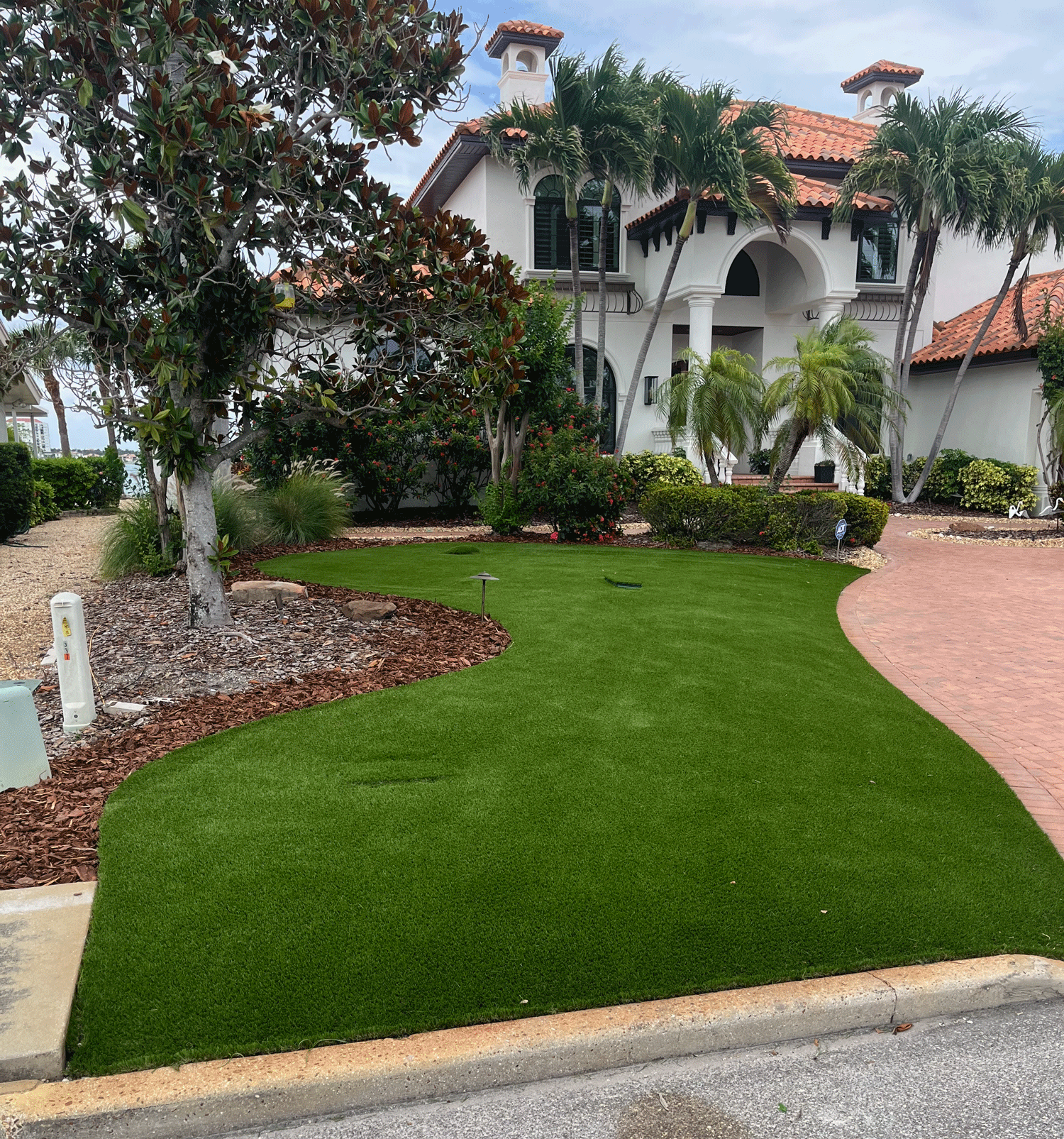
Grading is not “making the dirt flat.” Flat is often the problem. Grading is engineered slope: a planned fall that moves water off living spaces and away from the structure, then hands it to a drain, a swale, or a legal discharge point.
At JR Landscapes Service we treat grading as the first structural layer of a luxury landscape — the same way we treat the compacted base under a paver patio or the wiring behind landscape lighting. Pretty plants on a wet pad do not last in Zone 10a.
The work that belongs in a Tampa Bay grading plan
- Site reading. We walk the lot after you describe where water sits. We look at slab height, fence lines, neighbor grades, pool cages, and existing downspouts.
- Positive slope away from the home. Living areas and hardscapes should shed water, not collect it.
- Cut and fill with compaction. Loose sand dumped in a low spot will settle after the next storm.
- Swales and catch points. A shallow, designed swale along a property line is often more reliable than hoping the lawn soaks it up.
- Subsurface drainage when the water table wins. French drains, channel drains at patio edges, and tight downspout connections give rain a pipe when the soil is already saturated.
- Prep for the finish surface. Sod, synthetic turf, rock, and pavers all need a different finished elevation.
That is why a 3D design consult matters before anyone brings a machine. You should see how the patio, turf, beds, and drain lines work as one system — not as three separate weekend projects. See our land grading service for how we prep Pinellas lots.
The fixes that last in Pinellas and Hillsborough
There is no single product that “solves Florida rain.” There is a stack. We match the stack to the lot.
| Situation | Why it floods | Durable fix |
|---|---|---|
| Bowl-shaped lawn | Yard was leveled or settled toward the center. | Regrade to a consistent fall; compact; finish with sod or turf. |
| Water against the slab | Grade tilts to the house or downspouts dump at the foundation. | Lift grade at the structure, extend downspouts, add a channel or French drain. |
| Sinking paver patio | Thin base, no compaction, no pitch, joints hold water. | Rebuild base in compacted lifts, set drainage first, then relay pavers. |
| Side-yard river | Two homes pinch a narrow corridor with no outlet. | Swale plus pipe to a legal discharge — never onto the neighbor. |
| Saturated even when sloped | High water table or hardpan; soil cannot accept more water. | Subsurface drain; turf or rock in the wettest zone. |
| Slope too steep to use | Erosion, washouts, unusable side yard. | Retaining wall with drainage behind it; terraces you can live on. |
The surface — grass, pavers, gravel — is the last decision. The first decision is where the water is allowed to travel.
Why cheap “just dump dirt” jobs fail by next June
We see the same rescue work every wet season. A crew brought in a few yards of fill, raked it smooth, and laid sod the same afternoon. It looked fine in March. By July the fill had settled, the sod was sitting in a new bathtub, and the homeowner was embarrassed to host.
Florida rain punishes shortcuts:
- Uncompacted fill shrinks. The low spot returns.
- A patio with no designed pitch becomes a reflecting pool. Algae follows.
- A French drain with no fabric, no stone, and no real outlet is just a buried trench that clogs.
- Sending your water onto the next lot creates a neighbor problem and, in some cases, a code problem.
That is the failure state: fly-by-night grading, a vanishing contractor, hidden extras, and a yard that still cannot host a barbecue. Design first. Engineering under the pretty layer. A clean site every day. Work that is still true after the next named storm.
When grading pairs with turf, pavers, and walls
The homeowners who get the biggest life change are not buying “a drain.” They are buying a yard they can use.
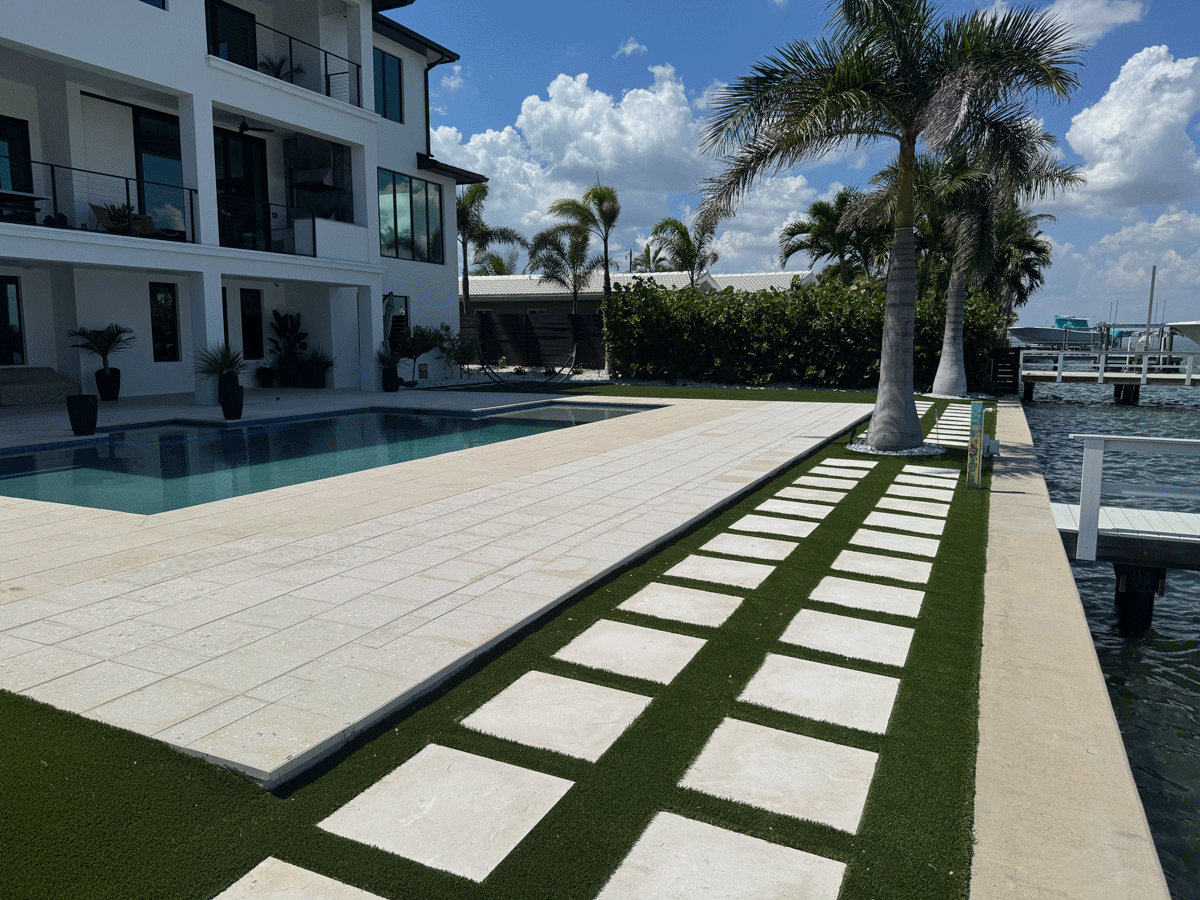
Synthetic turf on a wet lot. If a strip of lawn dies every summer because it never dries, premium turf over a properly prepared and drained base can turn that failure zone into a year-round living surface. Turf does not fix a bathtub by itself. Grading and a drain field under the turf do.
Paver patios and pool decks. Luxury travertine and concrete pavers only stay tight when the base is compacted in lifts and the surface is pitched. If your patio already holds water, resealing will not save it.
Retaining walls. A wall without drainage behind it is a future lean. We design walls as grade-change tools — usable terraces, not just a stack of blocks.
Rock, gravel, and mulch beds. Decorative rock is an honest finish for a drainage corridor. Mulch is not. If a bed is a spillway, specify rock so the first storm does not relocate your landscape into the street.
What this project usually looks like
Step 1
Schedule your free design consultation
No pressure, no obligation. We want to see where water sits and how you want to live outside.
Step 2
Approve your custom plan
You will see the grade change, drain lines, and finish surfaces together — often with 3D visuals — before a shovel hits the sand.
Step 3
Kick back while we install
Crew on time, work on budget, site left clean. The goal is a yard that dries and does not ask you to moonlight as a landscaper.
What a dry, finished yard gives you
Success is not a slightly less muddy lawn. Success is identity change.
You go from the homeowner who apologizes for the backyard to the host of a luxurious oasis. Morning coffee does not require duckboards. Grandkids can play without coming inside soaked. The patio is usable the same evening the storm ends. Curb appeal stops dragging the house down.
And you get the quiet pride of owning one of the block’s best addresses — backed by a local team that already knows what salt air, summer cells, and sandy lots do to weak work.
St. Petersburg yard drainage FAQs
Is standing water after rain normal in St. Pete?
A sheen that disappears as the storm ends can be normal on flat sand. Water that remains in the same footprint the next day — or still sits on day three — is a drainage problem. Treat it as a property issue, not a weather report.
Will a French drain fix my yard by itself?
Only if the pipe has a real outlet and the surface is graded toward it. A drain in the bottom of a bowl with nowhere to discharge will fill and stay full. Grading and drainage are one system.
Can I just add more dirt and resod?
You can. Many people do. Then they call us the following summer. Uncompacted fill settles, and sod in a low bowl rots. If you are going to move soil, move it once, compact it, and finish to a designed elevation.
Do I need a permit?
Simple regrading on a residential lot is often handled as part of a landscape install. Walls over a certain height, work in easements, and anything that changes how stormwater leaves the property can trigger city or county review. We flag that in the consult so you are not surprised.
What if my lot is in a flood zone?
Grading still helps surface water and protects living areas, but it does not rewrite a FEMA map. For chronic structure flooding or a home that takes on water in named storms, we will tell you honestly when a drainage engineer or elevation conversation belongs in the mix. We will not sell you plants as a flood wall.
Does synthetic turf help with drainage?
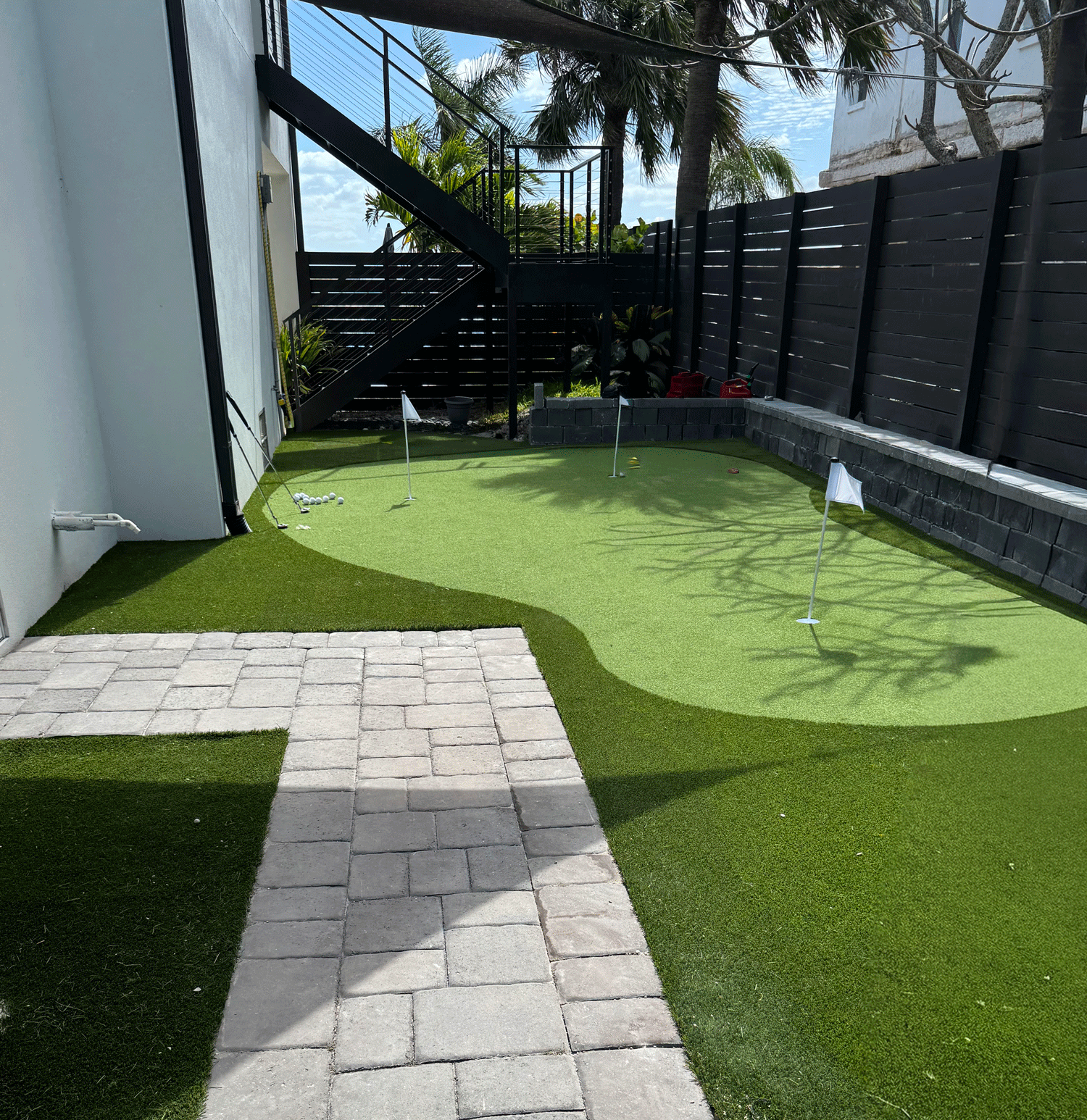
Quality turf over a prepared stone base can move water better than a compacted, dying St. Augustine lawn. It is not magic. If the lot has no outlet, the water still has to go somewhere. We design the base and the discharge together.
Keep exploring the oasis
Land grading in St. Petersburg
Paver patio installation
Retaining wall installation
Synthetic turf · St. Petersburg
Custom landscape design
Pinellas & Hillsborough service area
Reclaim the yard before the next wet-season weekend
You should not be the on-call pump crew for a lawn that was never given a slope. As St. Petersburg’s go-to landscaping team — 4.9 stars on Google, Facebook, and the BBB — we rebuild wet disasters into outdoor rooms that dry, hold, and host.
